
You’re pregnant and wondering: How can I safely continue doing CrossFit throughout my pregnancy?
With a normal and healthy pregnancy, exercise is considered to be safe and very beneficial to both mom and baby. Even if you are not currently exercising, you can start during pregnancy and it’s safe to improve your fitness! You just have to make sure you are listening to your body and modifying appropriately for the changes your body is going through during each trimester. Always consult with your healthcare provider before starting or continuing any exercise program during pregnancy. This information is for educational purposes and is not medical advice.
FIRST TRIMESTER
What is happening?
- Your body is adjusting to hormone changes
- Common symptoms - extreme fatigue, nausea, morning sickness
How to modify
- Decrease workout intensity, volume, and loads being lifted if you are not feeling well
- Decrease the number of days you are working out per week or the amount of time per workout
- Light cardio/bodyweight workouts to get yourself moving without overdoing it
- If you feel good, keep doing what you normally do! You won’t have to modify exercises until your belly starts showing
Remember, you are growing a human which takes TONS of energy!! It may be tough to eat as well as you normally do if you are nauseous and sick. You also might just be exhausted. It’s okay to miss some time in the gym! Be sure to listen to your body and prioritize rest and nutrition. Most women start to feel better in the second trimester.
SECOND TRIMESTER
What is happening?
- Your belly is growing! Time to start modifying some exercises
- No more laying on your belly
- You will start to see doming in your abdomen with some exercises. See the picture below. Notice how you see the middle of my belly pops up. This is what you want to avoid. Rather, your belly should be nice and rounded when you contract your core.
- As your belly grows there will be a natural separation of your abs. Doming occurs when there is too much stress on your abs and it will worsen the separation
- Stop at the first sign of doming and modify the exercise!!
- You should (hopefully) have more energy and be able to do more of a normal workout routine if you had to modify during the first trimester
- Monitor for pelvic floor pressure or heaviness
- Limit laying on your back as your belly gets bigger
- Weight of the baby can affect blood supply
- If you feel okay on your back, it is probably safe to do a few exercises there for a short time, but may be better to modify to sidelying or seated position if possible
- If you are on your back and start feeling nausea, dizziness, or difficulty breathing, blood supply is being affected and you should get up immediately
- Studies show that blood supply is affected when laying on your back for a prolonged amount of time
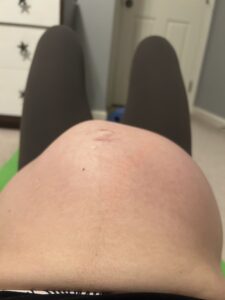
How to modify:
- Stop exercises where you have to lay on your belly (burpees, hand release pushups, ets.)
- Elevate hands on a box
- Stop sit ups and similar core exercises - these will cause doming early on
- Do planks, shoulder taps in plank, side planks, anti rotation exercises
- Elevate hands on a box as your belly keeps going and these exercises put more strain on your core
- As your belly continues to grow, stop any exercises that cause doming. This may include exercises hanging from the rig like pull ups and toes to bar
- Modify olympic lifts when your belly starts to get in the way of the barbell. If you have to swing the barbell around your belly, you should modify so you’re not starting bad habits that you will have to correct postpartum. Do these lifts as long as you can maintain a straight bar path without hitting your belly
- When you feel pressure in your pelvic floor, modify the exercise
- Swap lower impact exercises (rowing, biking, skiing) for higher impact exercises like running and jump roping
- Decrease weight being lifted or exertion in an exercise
- Make sure you are not bearing down or holding your breath
During the second trimester, you should be feeling more like yourself but this is when your body will really start to change and you’ll have to modify more. You should be able to increase some intensity and volume again if you had to back off during the first trimester, but you’ll have to start modifying for your belly now. Keep an eye out for doming, pressure in your pelvic floor, or straining/pulling in your abs. If you feels any these symptoms, modify what you are doing. Generally if something doesn’t feel right, don’t do it. Trust me, it’s not worth pushing through and worsening your diastasis or giving yourself prolapse. That will only complicate your postpartum recovery. A session with a pelvic floor PT may be helpful at this point to help you learn how to breathe and manage pressure properly.
THIRD TRIMESTER
What is happening?
- Your belly is continuing to grow! You will likely get more uncomfortable, especially closer to the end of the third trimester
- The hormone relaxin is setting in
- Causes laxity or “looseness” throughout your body to help the baby move through your pelvis during delivery
- Can cause pain or discomfort in your joints and increase risk of injury
- Don’t push through pain!! It will only get worse as your pregnancy progresses
- Common areas you might feel pain - SI joints, pubic symphysis, low back
- Continue to monitor for doming.
- Monitor for “weird” symptoms like pelvic floor pressure or heaviness, feeling like baby is “right there”, difficulty eliminating pee or bowels. These could be signs of prolapse so contact your healthcare provider if you experience these symptoms.
How to modify:
- Swap barbell lifts out for dumbbells, kettlebells and bands so you can decrease the weight you are lifting while still challenging yourself
- If you are having pain in your pubic symphysis, stop single leg exercises like lunges and modify with double leg exercises like squats
- Continue to be aware of doming in your abdomen and modify when needed
The third trimester is when your belly continues to get bigger so you’ll have to continue to modify for that. You also will have the hormone relaxin kicking in, which causes laxity in all of your joints and can increase pain in your joints/pelvis. If you are having pain, especially in your back, SI joints, or pubic symphysis, modify what you are doing. Don’t push through pain or it will get worse as your pregnancy progresses. If you have pain in your pubic symphysis, stop doing single leg exercises and/or decrease weight and depth of squatting. Consider minimizing the load you are lifting by replacing barbell lifts with more dumbbells, kettlebells, or bands. Do more seated or side-lying exercises if necessary. This way you can decrease your load while still feeling like you are being challenged. You will want to continue to be aware of doming in your abdomen, stress or pulling in your core, and pressure or tension in your pelvic floor, and back off at the first sign of any of those. Monitor for “weird” symptoms like pelvic floor pressure, vaginal heaviness, feeling like baby is “right there”, difficulty eliminating pee or bowels. This could be a sign of prolapse, so if you feel any of these symptoms contact your provider. During the third trimester, you can expect to have to modify a lot more and that’s okay! You may decrease your overall volume too.
One of the challenging things with modifying for pregnancy is that no exercise is always considered to be safe and no exercise is always considered to be unsafe. Some people run and continue to lift heavy all the way through their pregnancy and some people have to modify a lot early on. It also differs from one pregnancy to the next for the same person. My first pregnancy I didn’t have to modify much until about 20-22 weeks with the exception of burpees and situps, and I continued to lift pretty heavy up until delivery. With my second one I had to stop running and jump roping around 18 weeks because I was feeling pressure in my pelvic floor and pubic symphysis pain with running, and I’ve had to modify a lot more a lot sooner than last time. You really just have to listen to your body and don’t be afraid to modify! Trust me, it will be worth it in the long run when you are postpartum and getting back to exercise. If you push through symptoms or pain, you may end up with more dysfunction and pain later.
See the chart below for common CrossFit exercises that need may need to be modified during pregnancy. I had a hard time coming up with modifications during my first pregnancy, so I hope this chart helps you!
Stay strong in every phase! This is just a glimpse of how you can continue to move confidently through pregnancy and beyond.
Navigating CrossFit workouts during pregnancy requires smart modifications. This chart provides common exercises and safe alternatives, along with clear guidance on when to modify. Always listen to your body first, and consult your healthcare provider.
| Exercise | Recommended Modifications |
When to Modify (Listen to Your Body!)
|
| Running | Bike, Row, Ski (lower impact cardio) |
Pelvic floor pressure, pain anywhere, or if it just doesn’t feel right.
|
| Rowing | Bike, Ski |
Abdominal doming, pressure in lower abdomen from growing belly.
|
| Double Unders, Single Unders, Crossovers | Line hops, plate touches, Ski (lower impact cardio) |
Pelvic floor pressure or if it just doesn’t feel right.
|
| Sit-ups / GHD Sit-ups | Planks, Side Planks, Shoulder Taps, Slow Mountain Climbers, Pallof Presses, Dead Bugs, Single Leg Lifts, Standing Banded Marches. Elevate hands on box/wall as belly grows. |
Usually Second Trimester or at the first sign of doming in your abdomen.
|
| Toes-to-Bar / Knees-to-Elbows | Planks, Side Planks, Shoulder Taps, Slow Mountain Climbers, Pallof Presses, Dead Bugs, Single Leg Lifts, Standing Banded Marches. Elevate hands on box/wall as belly grows. |
At the first sign of doming or increased strain in your abs.
|
| Pull-ups | Banded Pull-ups (earlier pregnancy), Banded Lat Pulldowns (with PVC pipe), Ring Rows (stand more upright as pregnancy progresses). |
At the first sign of doming or increased strain in your abs.
|
| Muscle Ups | Generally not recommended during pregnancy. Focus on foundational strength & stability. |
Avoid due to high intra-abdominal pressure and risk of injury.
|
| Handstand Push-ups | Pike Push-ups, Dumbbell Shoulder Press |
If uncomfortable going upside down, or at the first sign of doming in your abdomen.
|
| Wall Walks | Shoulder Taps in Plank. Elevate hands on box as pregnancy progresses. |
At the first sign of doming in your abdomen.
|
| Push-ups | Elevate hands to a box (higher box = less core stress). |
At the first sign of doming, or when your belly gets in the way. Increase box height as pregnancy progresses.
|
| Burpees | Burpees to a box (elevate hands). |
Once you are showing and no longer comfortable on your belly. Increase box height as belly grows or if you feel core stress/doming.
|
| Burpee Box Jumps | Burpees to a box with a Step-Up. |
Once you are showing and no longer comfortable on your belly. Increase box height as belly grows or if you feel core stress/doming.
|
| Bar Facing Burpees / Lateral Burpees Over Bar | Burpees to a box with a Step-Over. |
Once you are showing and no longer comfortable on your belly. Increase box height as belly grows or if you feel core stress/doming.
|
| Box Jumps | Decrease box height, Box Step-Ups. |
When jumping doesn’t feel comfortable or safe. Decrease box height for step-ups as your belly grows.
|
| Snatches | Snatches from the hang position, Full DB Snatches, Hang DB Snatches. For strength focus, sub Snatch Grip Push Presses +/- Overhead Squats. |
Move to hang when uncomfortable bending to floor. Move to DBs/Push Presses when belly impacts bar path.
|
| Cleans | Cleans from the hang position, DB Cleans, Hang DB Cleans, Barbell Front Squats. For strength focus, sub Front Squats. |
Move to hang when uncomfortable bending to floor. Move to DBs/Front Squats when belly impacts bar path.
|
| Bench Press | Dumbbell Incline Bench Press. |
If uncomfortable on your back, or at the first sign of doming in your abdomen.
|
| Overhead Squats | Back Squats. Add Snatch Grip Push Press if working on overhead strength/stability. |
At the first sign of doming, or if you feel you can’t keep your core engaged.
|
| Deadlifts | Elevate barbell using plates or squat rack; use dumbbells and limit Range of Motion (ROM). |
When uncomfortable bending to the barbell while maintaining good form.
|
| Lunges, Bulgarian Split Squats | Squats, Goblet Squats (double leg exercises). |
If you feel pain or discomfort in your pelvis with these movements, or after doing them, or if you have difficulty balancing/maintaining good form.
|
| Overhead Lunges | Hold DB or KB in front rack position or down by side, Goblet Squats. |
Second or Third Trimester, or if you feel strain on your core in OH position, or if you feel excessive arching in your back due to lack of core control.
|